
Virtual Reality and the Future of Immersive Experiences
Meta Quest, Apple Vision Pro and mixed reality are turning virtual tours into places you can stand inside. What VR changes for property, tourism and education — and what is coming next.
Key Takeaways
- VR delivers true spatial presence - scale, height and distance - that screens cannot.
- Meta Quest made headsets affordable; Apple Vision Pro made spatial computing premium.
- WebXR lets browser-based tours jump to full VR with no app install.
- Property, tourism and education are the first sectors seeing real VR adoption.
- Any 360tours.studio tour works in VR today via the Meta Quest viewer.
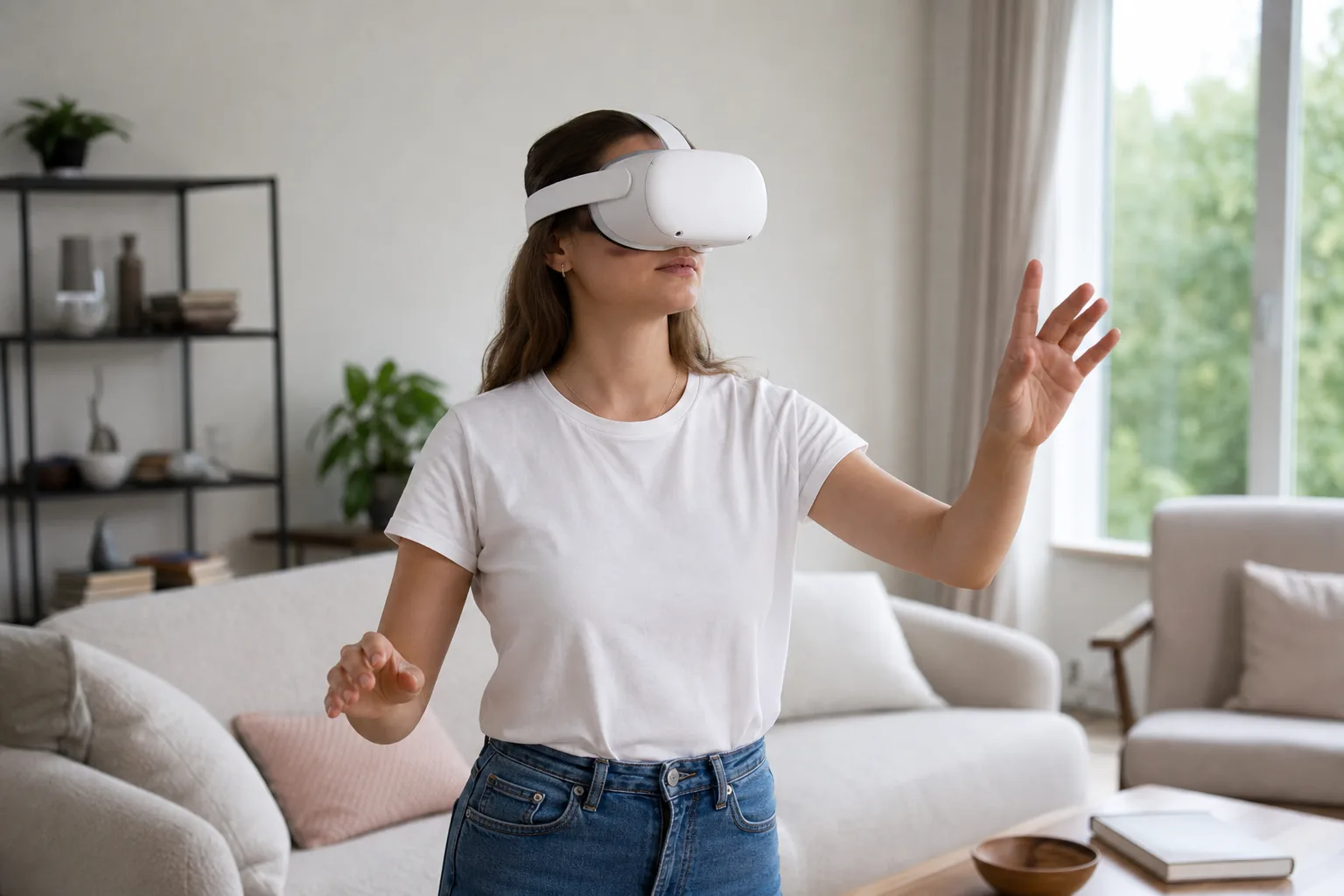
Every virtual tour you have opened on a phone or laptop is the flat version of itself. The same tour in a VR headset is something categorically different: not an image you look at, but a place you stand inside. With Meta Quest headsets in millions of homes and Apple pushing spatial computing into the mainstream, that difference is about to reshape how spaces are marketed, taught and explored.
This article covers where VR tours are today, what the hardware race means, and where immersive experiences go next. For the fundamentals of tours themselves, start with the ultimate guide to virtual tours.
What VR actually adds: presence
The word researchers use is presence — the sensation of being there rather than looking at there. On a screen, a 360 tour shows you a room. In a headset, the room surrounds you at true scale: ceiling height reads correctly, distances feel real, and turning your head (rather than dragging a mouse) makes exploration involuntary and natural.
For high-consideration decisions, presence is not a gimmick. Judging whether a sofa fits, whether a hotel suite feels generous or cramped, whether a wedding ballroom has the atmosphere you imagined — these are spatial judgements, and VR is the only remote medium that conveys them faithfully.
The hardware moment
VR has had false dawns before. What is different now is that the hardware finally matches the promise, at two ends of the market.
Meta Quest: affordability and scale
The Quest line did for VR what smartphones did for cameras: made it standalone, wireless and affordable. No gaming PC, no cables — a self-contained headset at games-console pricing, sold in the tens of millions. For tour publishers this is the audience device: cheap enough for an estate agency to keep one in the office for buyer sessions, common enough that a growing slice of your audience already owns one.
Every tour published with 360tours.studio works on Quest today through our Meta Quest viewer: the viewer opens vr.360tours.studio in the headset browser, enters a short code, and steps into your tour — fully branded, no app installed.
Apple Vision Pro: the premium benchmark
Vision Pro attacked from the opposite end: micro-OLED displays sharper than the eye can resolve, seamless passthrough blending virtual and real, and the "spatial computing" framing that repositioned headsets from gaming toys to professional tools. Its prices will fall and its ideas will spread — most importantly the assumption that immersive content is just content, viewed on whatever device suits the moment.
Mixed reality: the third mode
Both platforms now do mixed reality — anchoring virtual content in your real surroundings. For tours, MR suggests a future beyond "teleporting" somewhere: a developer's masterplan on the boardroom table, a dollhouse model of a listing floating beside the estate agent's desk, a furniture option toggled in the room you are physically standing in (the in-tour version of this exists today as virtual staging).
The quiet enabler: WebXR
The technology that makes all this practical is the least glamorous: WebXR, the web standard that lets a browser-based 360 tour switch into full immersive mode on a headset.
Why it matters: no app stores, no installs, no per-platform development. The same link that opens your tour on an iPhone opens it in VR on a Quest. For publishers, that means VR is not a separate production — it is a free delivery channel for the tour you already made. That is precisely how the 360tours.studio Quest viewer works.
Where VR tours land first
Property
The furthest along. VR viewings collapse distance: an investor in Singapore tours five London flats in an evening, at true scale, and books one physical visit instead of five. Developers sell off-plan from VR show homes before ground is broken. Agents run headset sessions in-branch as a premium service that wins instructions. The economics we cover in Why every business should have a virtual tour all intensify in VR, because presence deepens confidence.
Tourism and culture
Museums, heritage sites and destinations already publish some of the best 360 content online; VR turns those from marketing into experiences people seek out for their own sake — standing in the Sistine Chapel, on the Great Barrier Reef, or aboard the ISS. Expect "visit before you book" VR travel previews and paid virtual tourism for places too fragile or remote for mass visits.
Education
Perhaps the deepest long-term impact: field trips without buses, budgets or physics. A history class stands in the Colosseum; a biology class walks through a heart. Combined with AI-generated environments from platforms like 360Worlds, the classroom's walls stop mattering. The full picture is in Virtual tours for education.
What is coming next
Photoreal capture gets spatial. Techniques like gaussian splatting and neural rendering are moving tours from "sphere you look out of" toward true volumetric spaces you walk through, with parallax and depth. Capture will stay camera-simple; reconstruction will get dramatically smarter — the same AI trajectory we track in How AI is changing virtual tours.
Social presence. Touring together — buyer and agent as voices (or avatars) in the same virtual space, pointing at the same kitchen island. Live guided viewings already work on screens; VR makes them feel like actually meeting at the property.
Headsets shrink toward glasses. Every hardware generation gets lighter and cheaper. When immersive viewing needs nothing bulkier than sunglasses, "look at the tour" and "visit the place" finish converging.
Immersive-first expectations. The generation growing up with headsets will treat flat photos of a major purchase the way we treat listings without photos at all: suspicious.
Publish once, immersive everywhere
The strategic takeaway for anyone marketing a space: you do not need to bet on a platform or build anything VR-specific. Publish a browser-based 360 tour and VR comes included — today via Quest, tomorrow via whatever wins.
Create a tour with 360tours.studio — the process takes under an hour — and it works on every screen and headset from day one. See pricing, try the demo, or go deeper on the whole medium in the ultimate guide to virtual tours.
Frequently Asked Questions

The 360tours.studio Team
Virtual Tour Experts
We build interactive 360 virtual tour software for estate agents and property marketers.
Related Articles
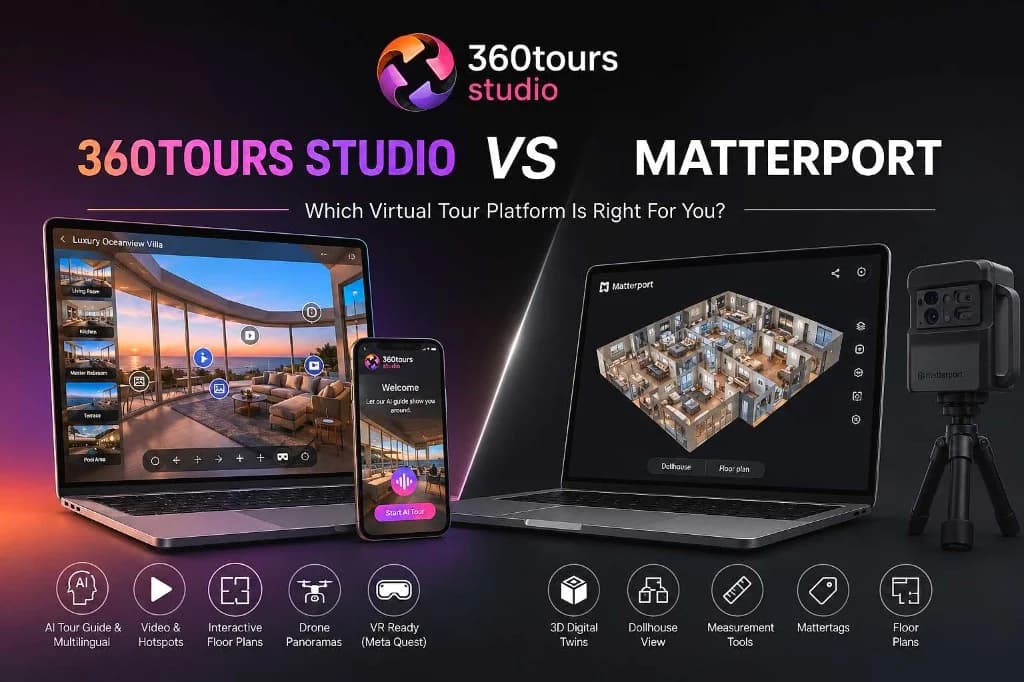
360Tours Studio vs Matterport: Which Virtual Tour Platform Is Best?
Comparing 360Tours Studio and Matterport: digital twins vs interactive 360 experiences, image quality, AI features, branding, capture speed and which platform fits marketing, education, tourism and property.
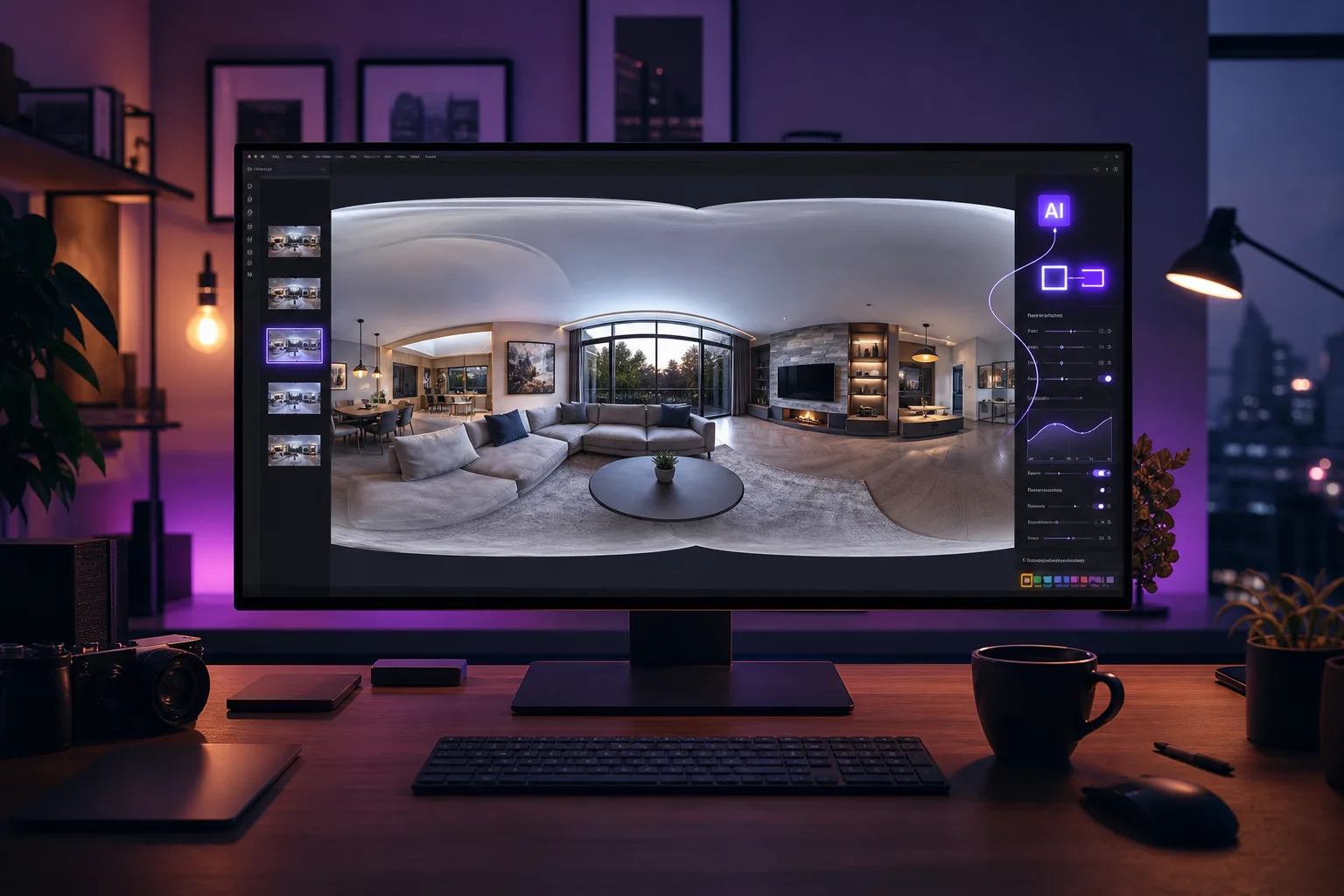
How AI Is Changing Virtual Tours
AI narration, instant translation, image enhancement, virtual staging and fully generated 360 environments — how artificial intelligence is transforming every stage of the virtual tour pipeline.
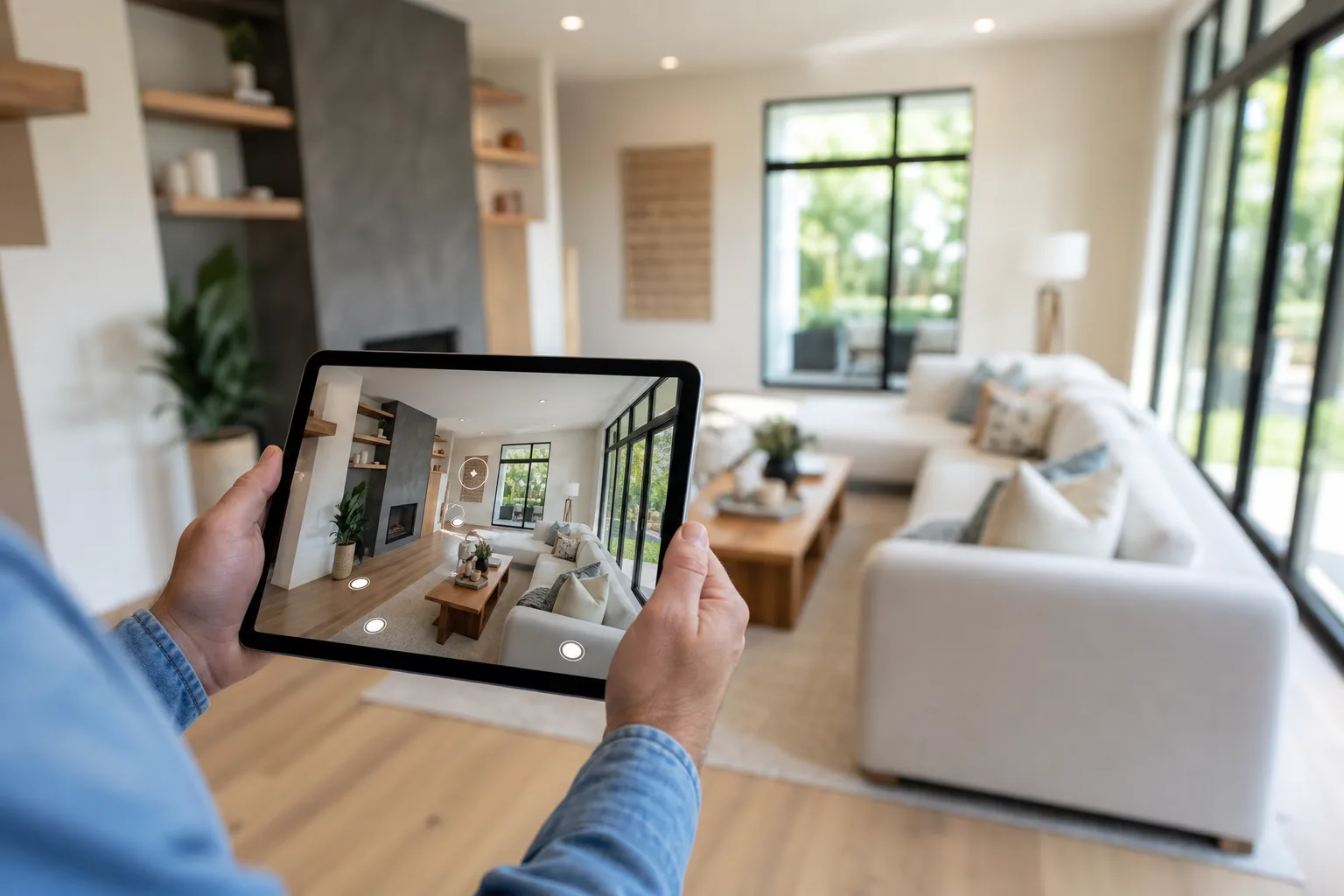
The Ultimate Guide to Virtual Tours (2026)
Everything you need to know about virtual tours: what they are, how they work, the technology behind them, the industries using them, and where AI and VR are taking immersive experiences next.