
Why Every Business Should Have a Virtual Tour
Hotels, schools, estate agents, healthcare, manufacturing, retail and offices — here is the industry-by-industry case for why every business with a physical space should publish a virtual tour.
Key Takeaways
- If your space influences a customer's decision, a tour will pay for itself.
- Tours qualify serious prospects before they contact you, saving staff time.
- Hotels, venues and schools see direct booking and enquiry uplifts from tours.
- A tour on your Google Business Profile strengthens local search visibility.
- Modern tours cost little - one 360 camera and software from £49/month.
Ten years ago a virtual tour was a luxury for flagship hotels and premium property listings. Today the economics have flipped: capture takes half an hour, software does the heavy lifting, and customer expectations have moved. People check a restaurant's interior before booking a table. They "walk" a gym before committing to a membership. And when they cannot, some of them simply choose the competitor they can see inside.
This is the industry-by-industry case for tours — and if you want the full background on the medium first, it is all in the ultimate guide to virtual tours.
The universal business case
Whatever your sector, tours deliver the same four mechanisms:
- Trust before contact. A tour shows your premises honestly, in full 360. That transparency signals confidence and removes the fear of the unknown that quietly kills conversions.
- Qualification. People who explore your space and then enquire are warm leads. Staff stop giving identical walkarounds to casual browsers.
- Always-open premises. Your building works evenings, weekends and across time zones. An overseas student, relocating employee or international buyer can visit at 3am their time.
- Search visibility. Tours increase time-on-page and connect to your Google Business Profile — both of which support rankings, as we detail in How virtual tours improve SEO.
Now the specifics, sector by sector.
Hotels and hospitality
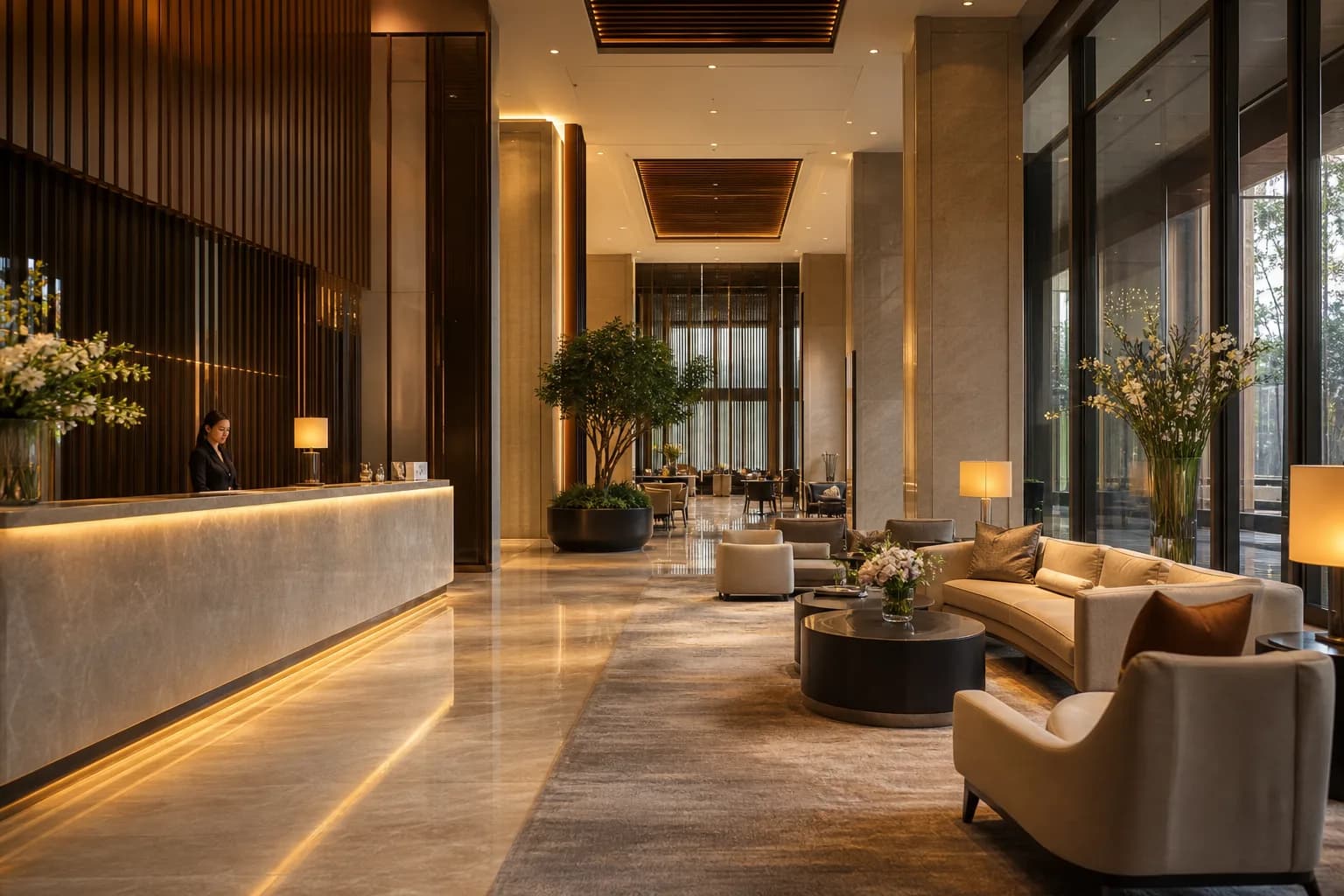
Nobody books a £300-a-night room from two wide-angle photos anymore. Tours let guests inspect the actual room category, the spa, the restaurant and the pool — and confidence is what converts lookers into direct bookings that bypass commission-charging OTAs.
For hotels, the highest-value scenes are room categories, suites and event spaces. For restaurants, bars and function rooms, a tour answers the question every private-hire enquiry asks first: "what does the space actually look like?"
Schools, colleges and universities
Open days reach the families who can attend. A virtual open day reaches everyone else — including the international students who represent the highest-value enrolments. Schools and universities publish campus tours with head-teacher welcome videos, department hotspots and multilingual narration.
Education's use of tours goes beyond admissions into actual teaching — a topic big enough that we gave it its own article: Virtual tours for education.
Estate agents and property
Property is where tours started and where the case is strongest — buyers short-list with their eyes. Estate agents win instructions by offering premium marketing, cut wasted viewings through pre-qualification, and reach relocating and overseas buyers. Letting agents fill voids faster with remote viewings; developers sell off-plan from a single show-home capture.
Tours embed directly on Rightmove and Zoopla listings, run live guided viewings for remote buyers, and can capture leads inside the tour itself with the Estate Agent viewer style.
Healthcare
An unfamiliar clinical environment produces real anxiety. Dental practices, clinics, hospitals and physiotherapy studios use tours to show patients exactly what to expect — reception, treatment rooms, equipment — which measurably reduces no-shows driven by nerves.
Care homes are perhaps the strongest healthcare case: the decision is usually made by family members, often at distance, choosing on trust. A transparent, explorable tour of bedrooms, lounges and gardens answers the questions a brochure cannot.
Manufacturing and industrial
The least obvious sector, with some of the highest-value use cases:
- Customer confidence — a tour of a clean, modern production floor is a sales asset for winning contracts.
- Audits and certification — remote facility reviews without flying inspectors in.
- Training and induction — new staff learn the site layout, safety stations and fire exits before day one.
- Investor presentations — show the operation without organising site visits.
Commercial property tours do similar work for warehouses and industrial units, letting remote tenants judge scale and condition instantly.
Retail and showrooms
A showroom tour puts stock in context — kitchens installed, furniture in room sets, cars on the floor — and extends your best physical asset to everyone who has not visited yet. Hotspots link products directly to your online store, turning the tour into a browsable shopfront.
Offices and coworking
Office lettings, coworking memberships and serviced-office sales all start with the same question: "can we see the space?" A tour answers it instantly, at any hour, for every prospect at once. It also serves recruitment — a candidate deciding between two offers will absolutely look at where they would be working.
Venues, gyms and everyone else
The pattern extends everywhere spaces sell: wedding venues and halls let couples shortlist before visiting; gyms and leisure centres remove the "will I feel out of place?" barrier; stadiums sell seat views and hospitality suites; churches and places of worship welcome newcomers and promote venue hire.
If you are still unsure whether a tour or a promotional video serves your business better, we compare the formats honestly in Virtual tours vs video.
Getting started: a practical first step
You do not need an agency or a big budget:
- Capture — a consumer 360 camera (£300–£500) and 30–60 minutes, or a professional photographer for larger premises. Camera guidance is in our buying guide.
- Build — upload panoramas to 360tours.studio, link the rooms, add hotspots for key selling points, attach a floor plan and add AI narration if you want a guided feel. The step-by-step is in How to create a virtual tour.
- Publish — embed on your website, add to your Google Business Profile and share on social. One link, every channel, including VR headsets.
Plans start at £49/month, with pay-as-you-go credits if you just want one tour live — details on the pricing page, or try the demo first to see what your customers would experience.
The businesses that adopted websites early, then online booking, then Google reviews all enjoyed a window of advantage before each became table stakes. Virtual tours are in that window now.
Frequently Asked Questions

The 360tours.studio Team
Virtual Tour Experts
We build interactive 360 virtual tour software for estate agents and property marketers.
Related Articles
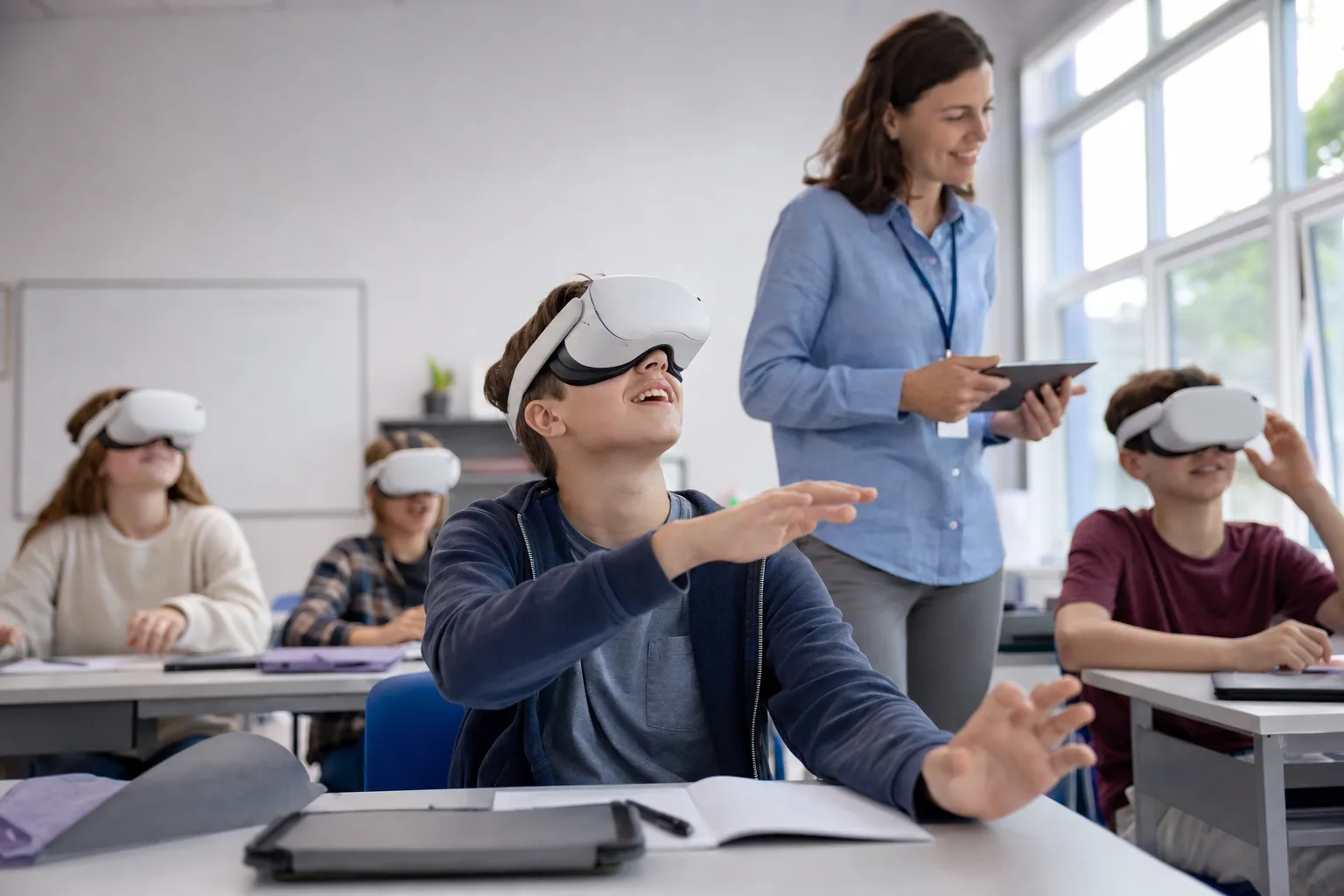
Virtual Tours for Education: Field Trips Without Walls
How virtual tours are transforming education — geography, history, science and biology lessons inside explorable 360 environments, virtual field trips, campus open days and genuinely accessible learning.
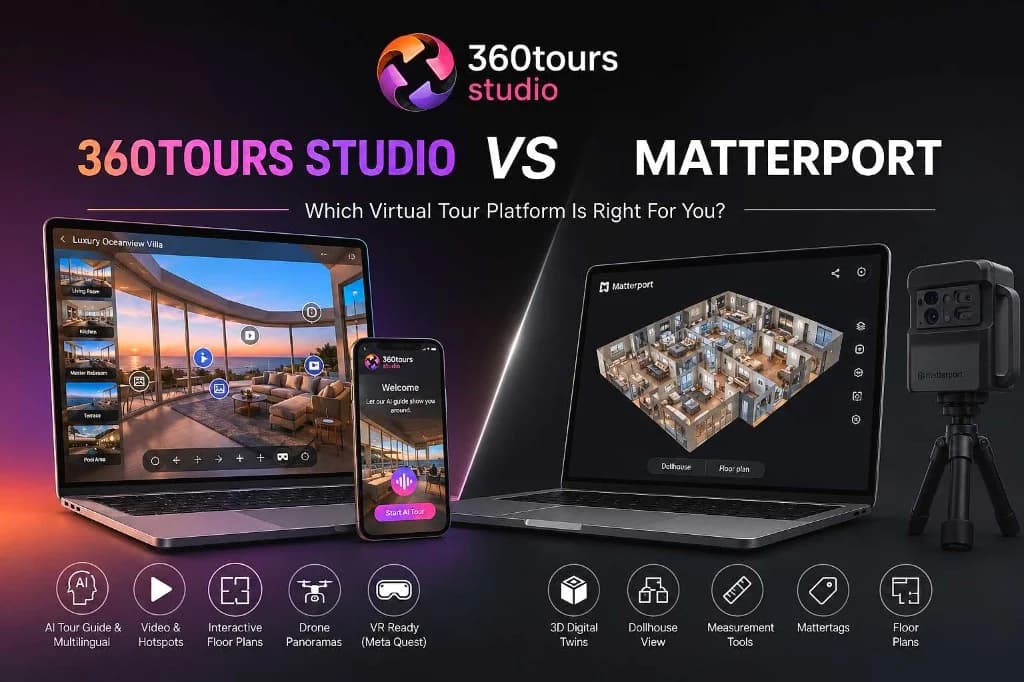
360Tours Studio vs Matterport: Which Virtual Tour Platform Is Best?
Comparing 360Tours Studio and Matterport: digital twins vs interactive 360 experiences, image quality, AI features, branding, capture speed and which platform fits marketing, education, tourism and property.
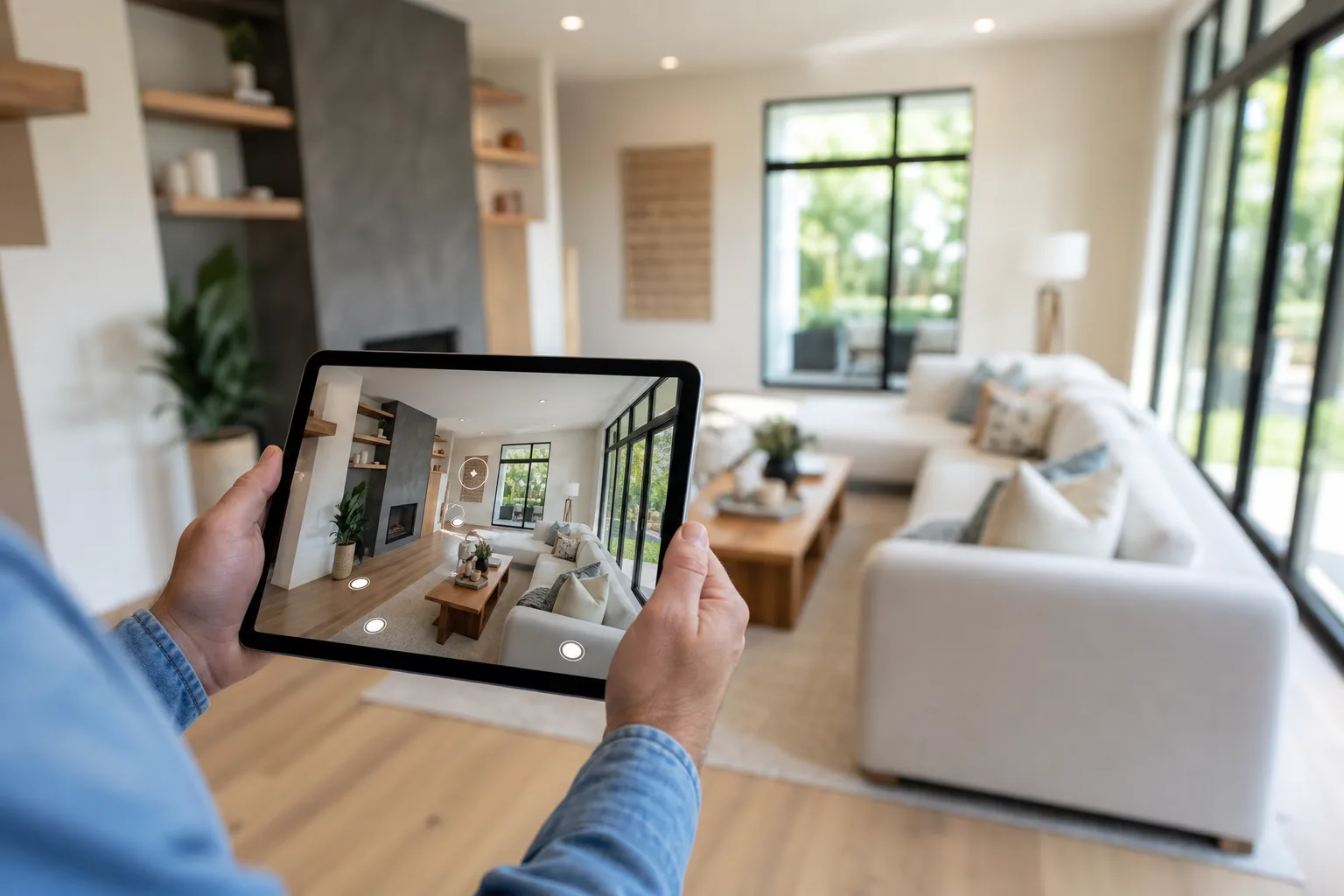
The Ultimate Guide to Virtual Tours (2026)
Everything you need to know about virtual tours: what they are, how they work, the technology behind them, the industries using them, and where AI and VR are taking immersive experiences next.